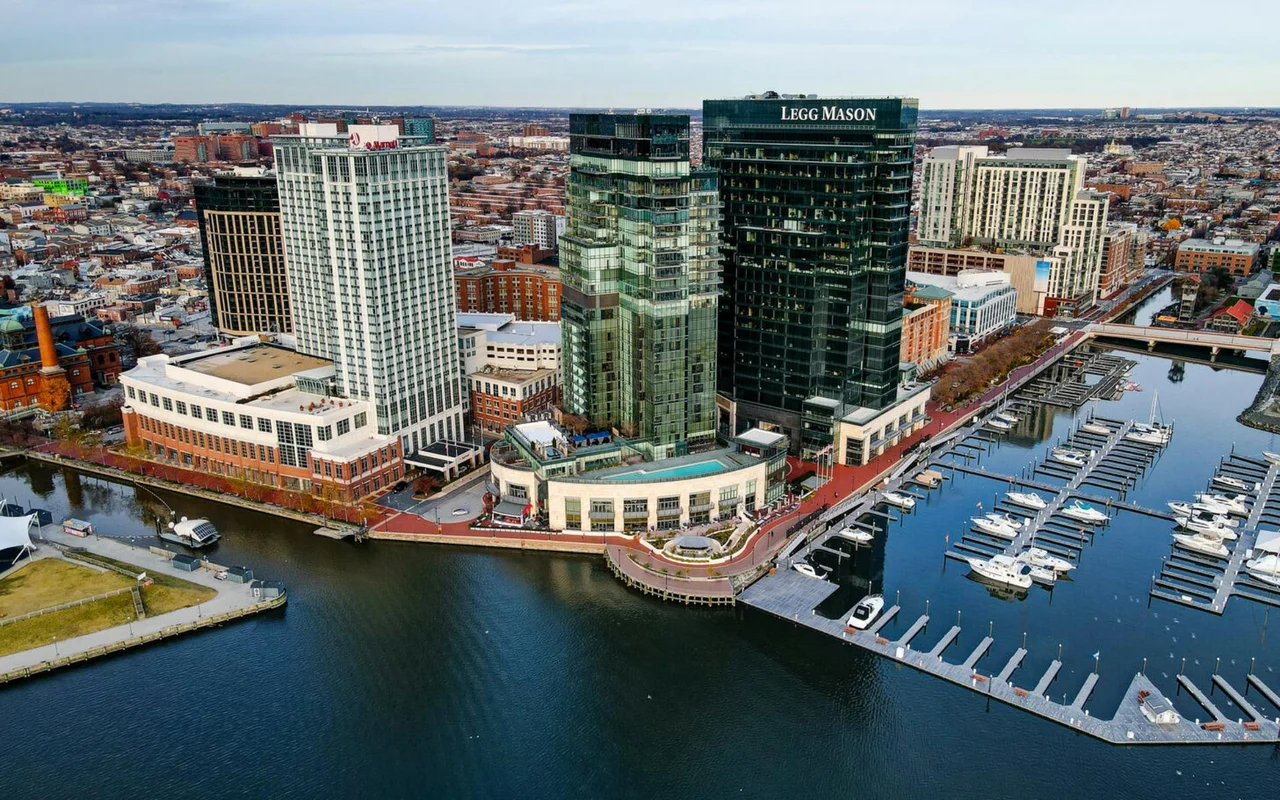
For Harbor East, venue approvals, graphics timing, and equipment staging should reflect the actual travel pattern, not only the map distance.
Baltimore Market Areas
Harbor East
Harbor East in Baltimore works best when booth strategy, venue timing, freight, labor, graphics, AV, and show-floor leadership are planned on one coordinated schedule instead of separate tasks.
For Harbor East, programs that repeat across Baltimore work better when storage, reuse, and refresh timing stay visible from the start.
For Harbor East, the strongest location plans account for the same labor, freight, and show-day pressures that appear inside the venue itself.
Project Route
Talk through Harbor East with the Baltimore team
For the east, bring the venue, the dates, the footprint, and any concerns around labor, freight, graphics, staging, or AV so the Baltimore scope can track the real room and the real schedule.
Start a conversationFor the east, the operating context is premium hotel and hospitality-driven event geography. That means the east should be read as a real operating choice rather than just a dot on the map next to M&T Bank Stadium.
For the east, when a program reuses the same assets across Baltimore and nearby markets, the location brief has to tell the team how much storage, refresh, and labor flexibility the calendar can actually support.
A clear the east plan gives sales, operations, and leadership the same picture before fabrication or crew booking gets locked.
Harbor East — what the area looks like for events
Harbor East falls inside the Baltimore service footprint for trade show projects.
Harbor East sits in the Waterfront Hospitality Belt area.
Projects in the east get scoped the same way as work in the Baltimore core: venue, dates, footprint, and budget frame first, then the build plan. The difference is usually in freight routing and which nearby buildings are the closest fit.
Baltimore trade show market
Visit Baltimore markets the city with waterfront meeting spaces, hotels with event halls, museums, and private-event venues concentrated around the harbor and downtown core, which sets the practical ceiling for a booth program working the market.
The county is strategically near both Baltimore City and Washington, D.C. and offers a wide selection of venues plus 3,000-plus hotel rooms.
The advantage of a local Baltimore team
Local fabrication means real-time problem-solving. A graphic that needs to be reprinted at 6 a.m.
Clients who run repeat programs across multiple dates end up paying less per event when the same team handles everything. Less re-briefing, less re-training, less re-checking — the operational overhead drops year over year.
Where Baltimore shows actually happen
Oriole Park at Camden Yards: oriole Park at Camden Yards is a 45,971-seat Major League Baseball park and home of the Baltimore Orioles.
The venue sits in the Camden Yards sports complex adjacent to M&T Bank Stadium and the Inner Harbor convention district.
Oriole Park at Camden Yards suits sponsor hospitality events, corporate receptions, outdoor activations, game day VIP experiences.
Hilton Baltimore Inner Harbor.
Baltimore Convention Center is one of the anchors.
Who handles what during the Baltimore install window
There is no single labor model for Baltimore trade shows.
Large Baltimore-Washington corridor programs benefit from early coordination around package handling, utilities, AV, breakout layouts, and venue-approved services. Baltimore venue requirements vary by facility, organizer, and event format.
What's included in the project scope
Individual projects layer or remove items based on scope.
A bad one has many, because they weren't.
Those run alongside the engagement rather than inside it.
From first call to strike
Once scope is clear, the venue work begins.
One named show-site lead runs the install.
That document drives the next booking.
Budget and timeline
Cost scales with how it is built, how big it is, what the venue charges for its own services, what the graphics look like, how far the crates travel, and how many days the team stays on-site.
Rental programs run on 8 to 12.
What a successful project looks like
Trade show ROI is measured at the lead and pipeline level.
The post-show debrief is where the numbers get connected back to the physical booth. Which demo station drew traffic, which meeting area closed more conversations, which graphic zone attracted dwell time — that feedback shapes the next build rather than getting lost.
Questions
Harbor East location questions
Do you work at Maritime Conference Center?
Yes. The property offers 100,000 square feet of meeting space.
How does labor work in Baltimore?
It runs venue by venue. Some properties route utilities, internet, AV, decorator services, or technical support through in-house teams or approved partners, while others leave more scope with the organizer and exhibitor contractor. Every Baltimore plan is checked against the current exhibitor manual, venue service matrix, and move-in rules before labor is booked.
How much lead time is ideal?
Custom builds run best with 16 to 20 weeks of lead time. Rentals take 8 to 12 weeks.
What information kicks off a project?
The show, the venue, the booth number, the dates, and a target budget range. From those, an initial scope and a realistic cost come back within a few days.
Who runs the booth on-site?
One named show-site lead runs the install, the show hours, and the strike. That person carries the floor plan and the punch list from crates to doors and reports up once a day.
Can the booth travel to the next city on our calendar?
Same structure, swappable graphics, standard crates.
What happens if something breaks during show hours?
The on-site lead handles it.