
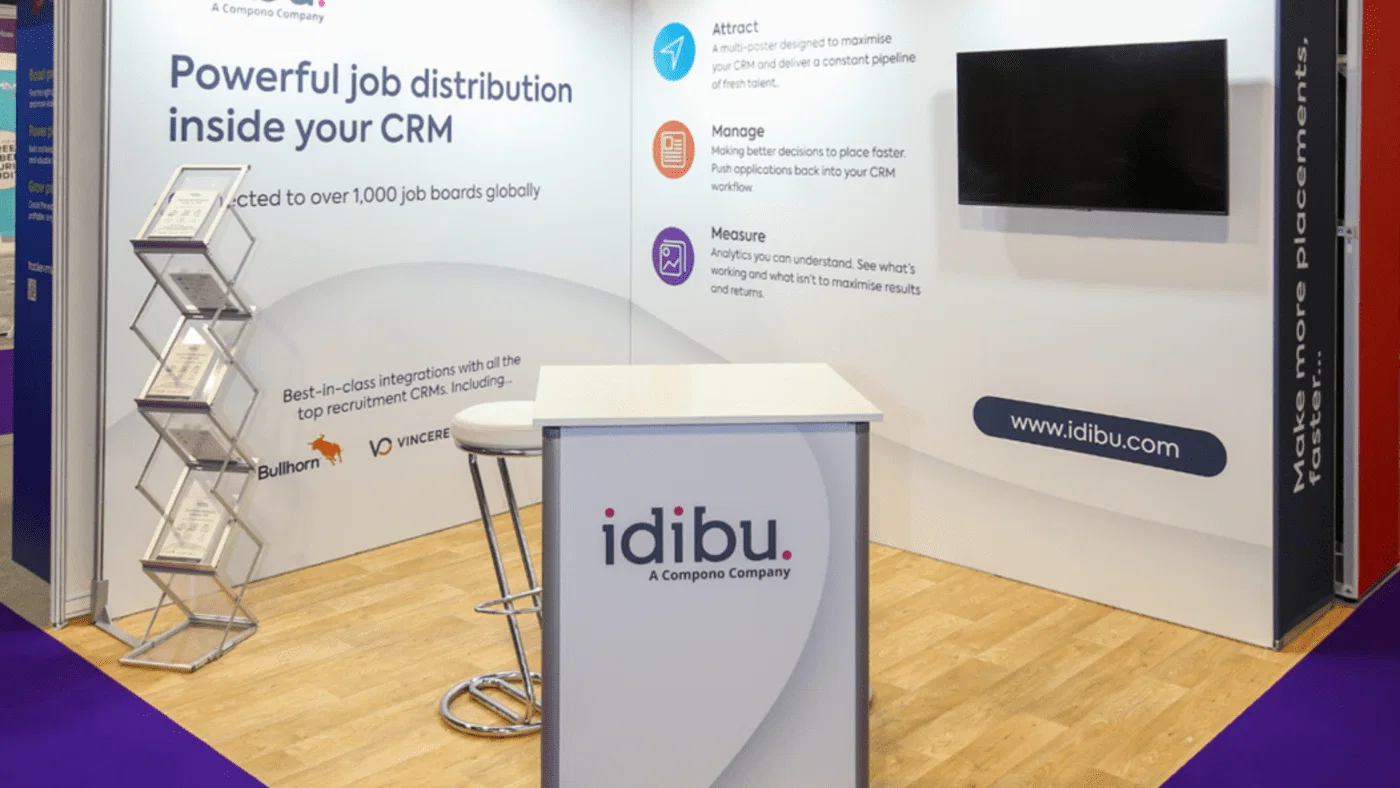
For Portable Trade Show Displays, portable Trade Show Displays should be evaluated for sightlines, storage, power drops, demo behavior, and what the crew can install cleanly in the available window.
Exhibit Formats
Portable Trade Show Displays
Portable Trade Show Displays in Baltimore works best when booth strategy, venue timing, freight, labor, graphics, AV, and show-floor leadership are planned on one coordinated schedule instead of separate tasks.
For Portable Trade Show Displays, freight, flooring, rigging, and dismantle strategy should be decided while the booth format is still being selected.
For Portable Trade Show Displays, gaylord says it works exclusively with selected conference service partners and highlights in-house technical professionals across its meeting campus.
Project Route
For Portable Trade Show Displays, talk through Portable Trade Show Displays with the Baltimore team
For the displays, bring the venue, the dates, the footprint, and any concerns around labor, freight, graphics, staging, or AV so the Baltimore scope can track the real room and the real schedule.
Start a conversationFor Portable Trade Show Displays, the displays changes the operating profile of the event as much as it changes the look of the exhibit because the footprint controls sightlines, storage, product access, and staff positions.
For the displays, that matters in Baltimore because the same brand can move from a convention hall to a ballroom to a suburban stop without getting the same floor conditions twice.
The right format keeps freight volume, rigging, graphics, AV, and dismantle timing realistic for Pendry Baltimore and the wider Towson corridor.
For the displays, when the event goal is demos, hospitality, executive conversation, or aisle visibility, planning should translate that goal into a build the crew can actually operate.
Baltimore as a trade show city
It offers 300,000 contiguous square feet of exhibition hall space, 85,000 square feet of meeting space, 50 meeting rooms, and a 36,672-square-foot ballroom — a useful reference point when sizing a project.
It is about a 20-minute drive from BWI Thurgood Marshall Airport and less than 2 miles from Baltimore Penn Station.
Baltimore neighborhoods and event districts
The National Harbor Expansion Zone area runs through National Harbor, Oxon Hill, College Park, Bethesda. Regional extension for large conventions, sponsor activations, and corridor-wide meeting support.
Annapolis and Anne Arundel Waterfront — Annapolis, Crofton, Laurel — is a different environment. Government-adjacent and waterfront retreat market suited to executive programs and hospitality-led events.
Who handles what during the Baltimore install window
Baltimore Convention Center: Because the BCC separates general service-partner workflows from utilities, AV, and telecom ordering, utilities, internet, and technical services as venue-coordinated rather than open-ended self-service.
Large Baltimore-Washington corridor programs benefit from early coordination around package handling, utilities, AV, breakout layouts, and venue-approved services. Baltimore venue requirements vary by facility, organizer, and event format.
Where Baltimore shows actually happen
A few Baltimore venues carry most of the calendar.
Oriole Park at Camden Yards.
The venue sits in the Camden Yards sports complex adjacent to M&T Bank Stadium and the Inner Harbor convention district.
Oriole Park at Camden Yards suits sponsor hospitality events, corporate receptions, outdoor activations, game day VIP experiences.
Hilton Baltimore Inner Harbor: hilton Baltimore Inner Harbor is a convention hotel connected directly to the Baltimore Convention Center via skywalk.
Baltimore Convention Center is one of the anchors.
What's included in the project scope
Individual projects layer or remove items based on scope.
A bad one has many, because they weren't.
Those run alongside the engagement rather than inside it.
From first call to strike
Everything downstream hinges on those answers.
Once scope is clear, the venue work begins.
The install phase has one owner on the floor.
Strike and closeout happen the same day.
Cost and lead time
Six variables drive the cost: custom versus rental, booth footprint and complexity, venue-specific labor and rigging fees, graphics scope and substrate, freight distance and timing, and the number of on-site supervision days.
A clean schedule starts 4 to 5 months out for custom work and 2 to 3 months for rentals. Shorter lead times are workable but push rush premiums and limit material choices.
How project performance gets measured
Most programs in Baltimore are evaluated on lead-capture volume, meetings booked on the floor, and qualified-pipeline attribution after the show. The booth is a means to those numbers — it is not the number itself.
Client teams sometimes want the booth to carry the pipeline on its own, but the best-performing programs treat the booth as a platform and put real operators on it. On-floor conversation discipline moves the KPIs more than any scenic decision.
Why Trade Show Services of Baltimore
Local fabrication means real-time problem-solving. A graphic that needs to be reprinted at 6 a.m.
Consistency across show dates is the other reason to hire local. The same crew that built the booth runs the install, knows the pack-out, and catches the small things — a missing hardware pack, a graphic edge that needs reseating, a storage crate routed to the wrong bay — without needing the client team to intervene.
Questions
Portable Trade Show Displays planning questions
Do you work at M&T Bank Stadium?
Yes.
How does labor work in Baltimore?
It runs venue by venue. Some properties route utilities, internet, AV, decorator services, or technical support through in-house teams or approved partners, while others leave more scope with the organizer and exhibitor contractor. Every Baltimore plan is checked against the current exhibitor manual, venue service matrix, and move-in rules before labor is booked.
How much lead time is ideal?
Custom builds run best with 16 to 20 weeks of lead time. Rentals take 8 to 12 weeks.
What information kicks off a project?
The show, the venue, the booth number, the dates, and a target budget range. From those, an initial scope and a realistic cost come back within a few days.
Who runs the booth on-site?
One named show-site lead runs the install, the show hours, and the strike. That person carries the floor plan and the punch list from crates to doors and reports up once a day.
Can the booth travel to the next city on our calendar?
Same structure, swappable graphics, standard crates.
What happens if something breaks during show hours?
The on-site lead handles it.